Climate Change is one of the most pressing challenges facing humanity today, and the economy plays a crucial role in addressing it. What is required was a major shift from the traditional linear economy to a more sustainable circular economy. This transition not only helps preserve our planet’s finite resources but also fosters collaboration among individuals, government agencies, and companies for a more responsible and regenerative way of living.
Linear vs. Circular Economy: What’s the Difference?
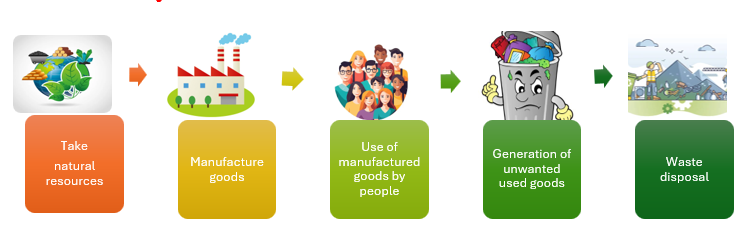
The linear economy has long been the conventional way of living. In this model, resources are extracted, used to create products, and then discarded after use. It emphasizes maximum use and profitability, often at the expense of sustainability. This system leads to increased waste, overflowing landfills, and higher emissions from incineration.
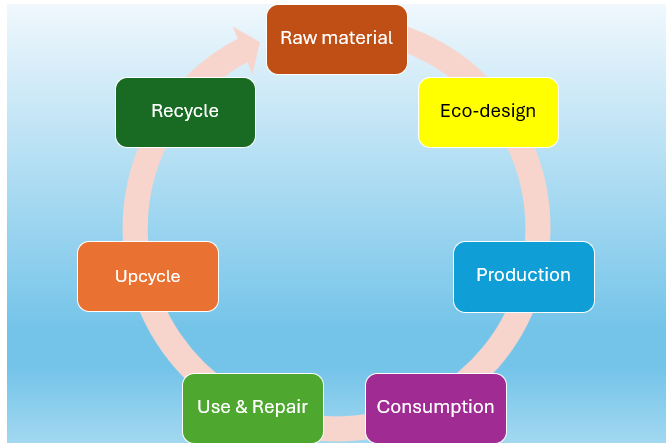
In contrast, the circular economy is centered around sustainability and the philosophy of “reduce, reuse, and recycle.” It aims to keep products, materials, and resources in use for as long as possible. Instead of focusing solely on consumption and disposal, it emphasizes thoughtful design, mindful production, and conscious consumption. The circular model also fosters eco-innovation, reduces environmental impact, and has opened up new job opportunities, all while benefiting companies economically and socially.
How Can We Practice Circular Economy in Our Daily Lives?
Making a meaningful impact starts at the individual level. Here are some practical ways to embrace circular Economy principles in your everyday life:
1.Recycling Plastic
Instead of tossing plastic bottles, containers, and packaging into the trash, collect and send them for recycling. The recycled materials can be processed into raw inputs for new products, reducing dependence on virgin resources.
2.Composting Organic Waste
Rather than letting food scraps and organic matter end up in landfills, compost them to create nutrient-rich soil. Compost not only reduces waste but also supports sustainable agriculture and gardening by providing organic fertilizers.
3.Extending Product Lifespan
Maintain, repair, and upgrade items like electronics, furniture, and appliances to prolong their usefulness. This reduces the need for new production and lessens environmental strain.
4.Switching to Renewable Energy
Adopt clean energy sources such as solar, wind, compressed natural gas (CNG), and biogas. These alternatives align perfectly with circular principles by minimizing fossil fuel dependency and reducing carbon footprints.
5.Using Reusable Items
Replace single-use products like plastic cutlery, straws, and containers with reusable alternatives. This small change significantly cuts down on waste generation.
6.Upcycling
Get creative with upcycling—transform old or unused items into something functional and beautiful. For instance, turn worn-out tires into outdoor furniture, sew quilts from old bedsheets, craft planters from broken containers, or make paper bags from old newspapers.
A Collective Responsibility
Building a circular economy isn’t a one-person job, it requires collective effort. Individuals, communities, businesses, and governments all play a role in creating a sustainable future. By making conscious choices and encouraging innovation, we can reduce our ecological footprint and foster a healthier planet for future generations.
– By Huma Syed